
Description
Product Overview
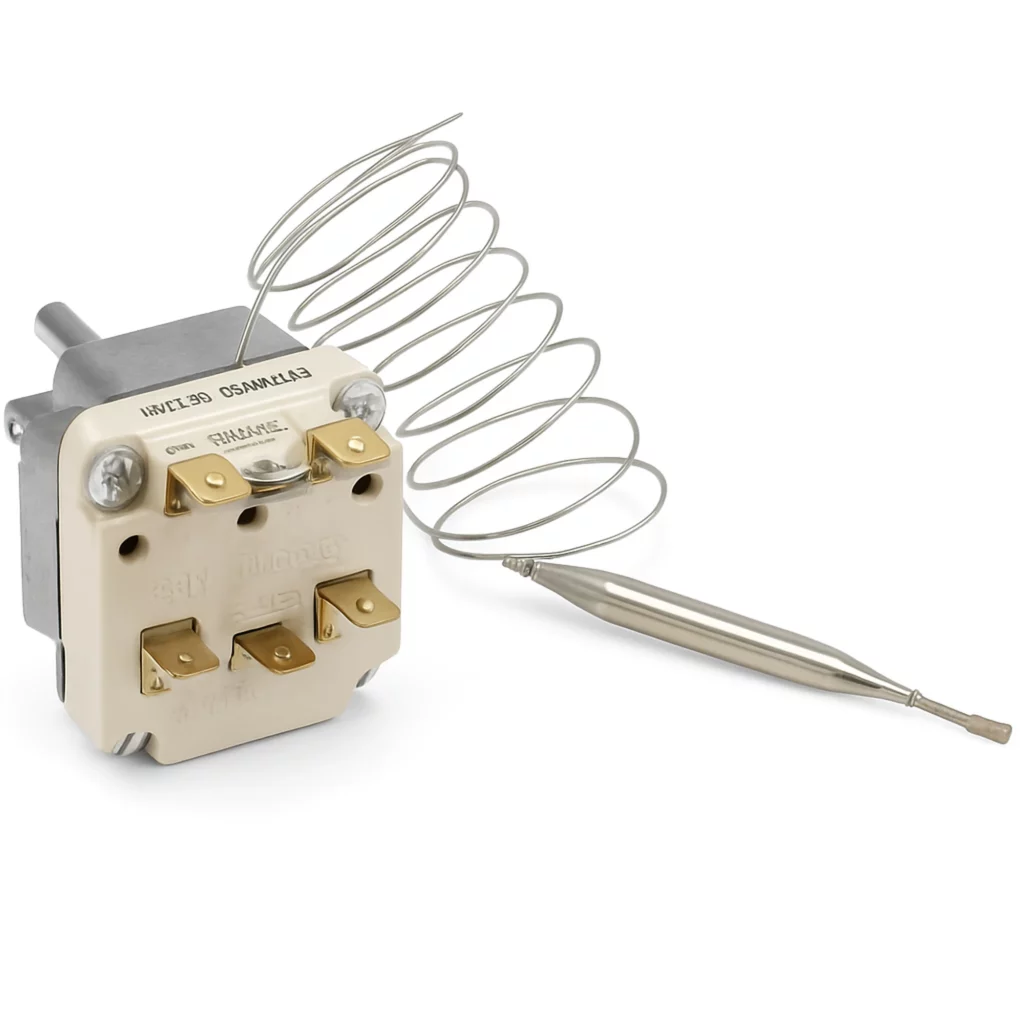
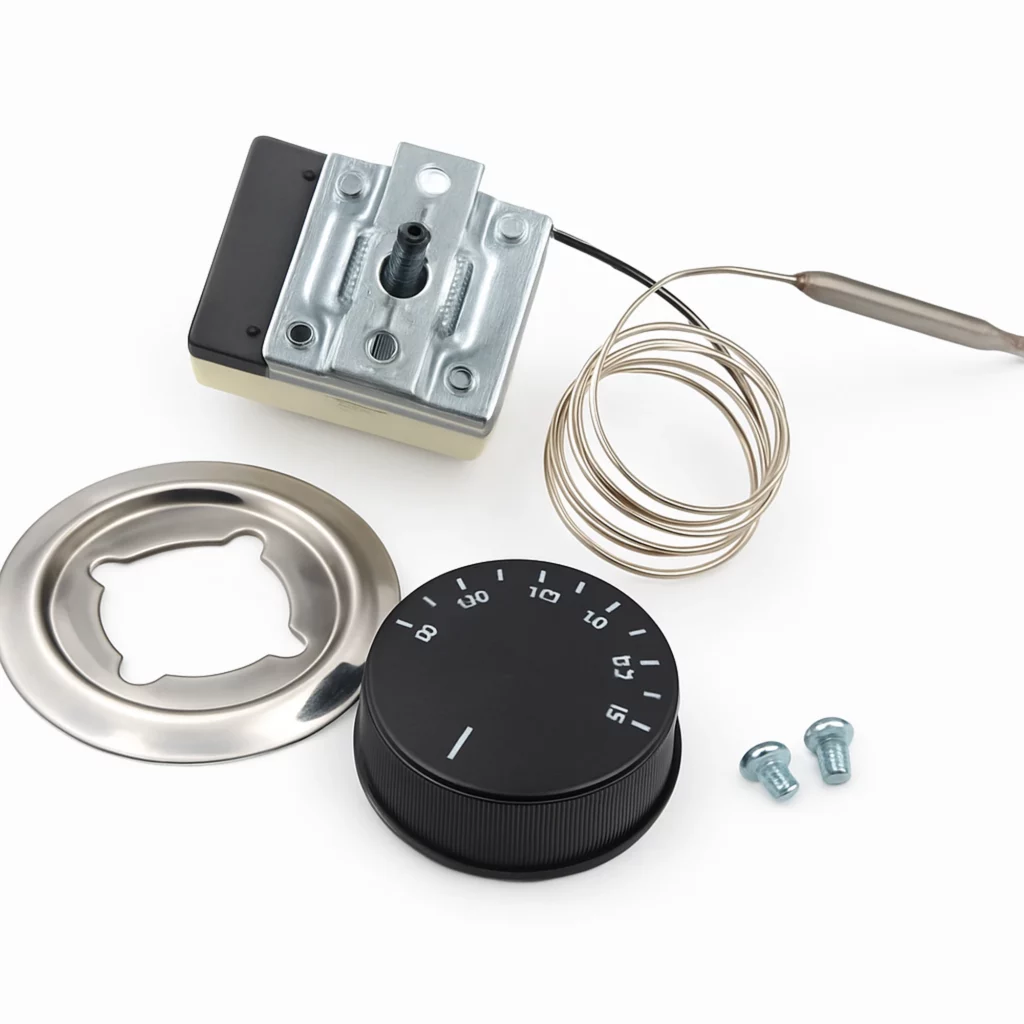
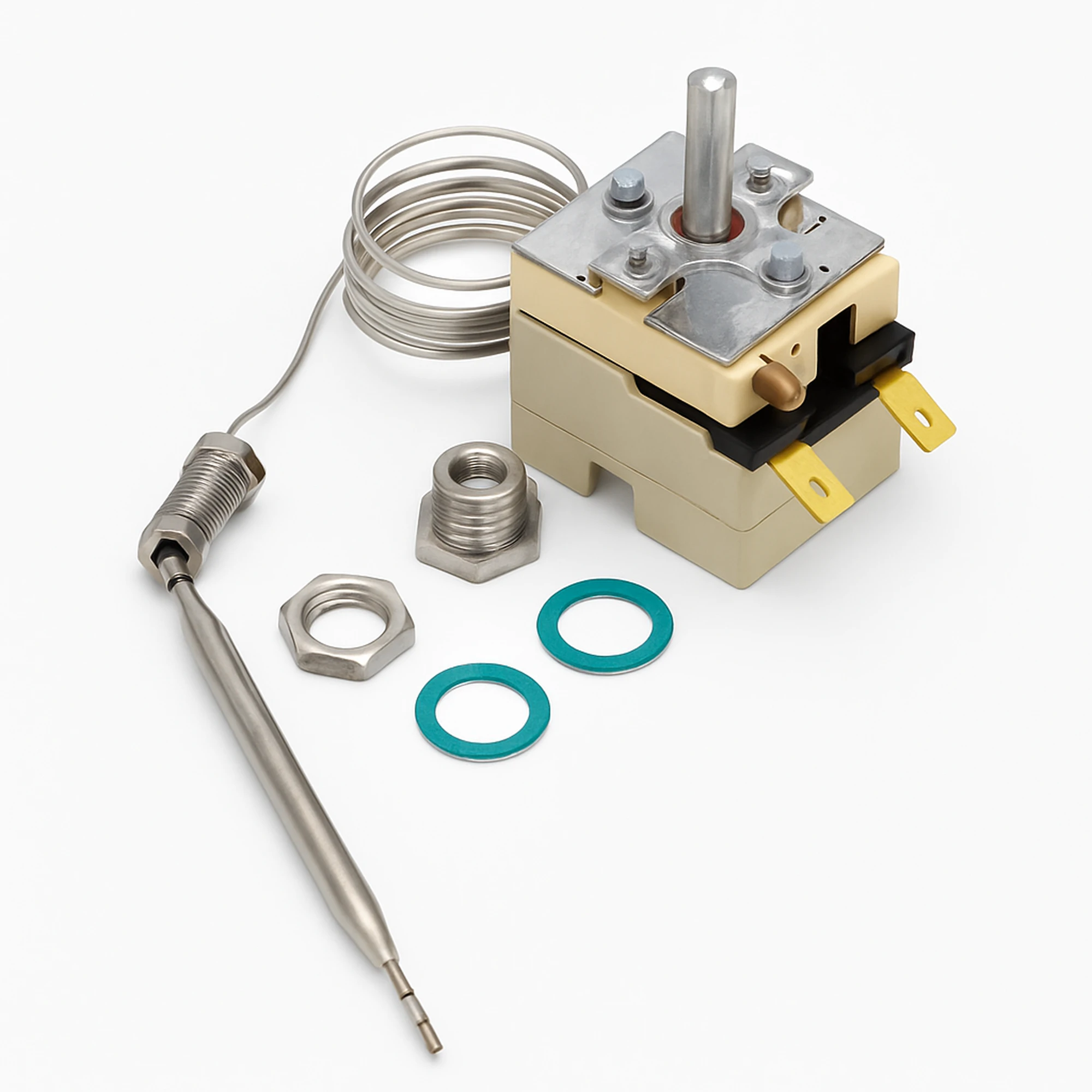
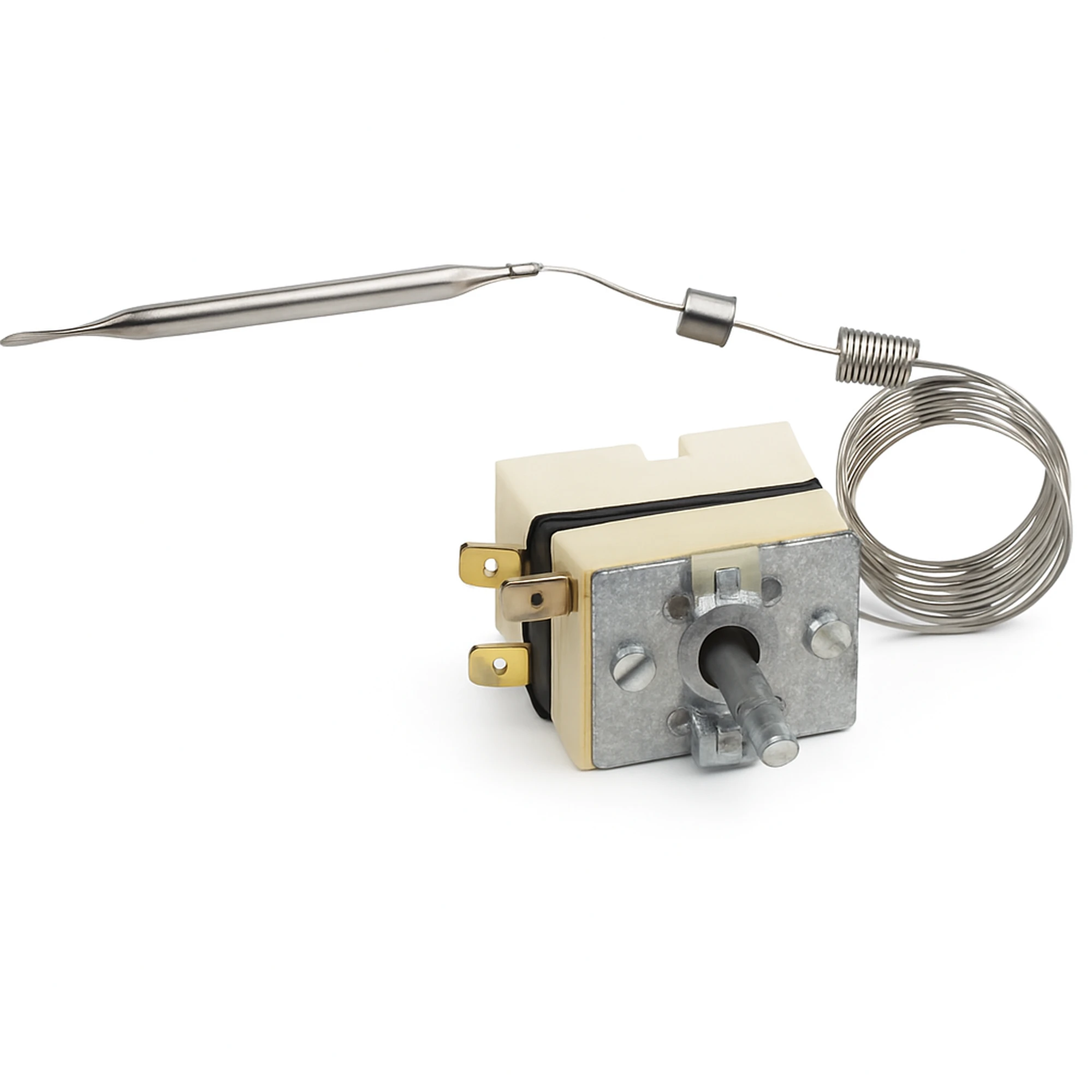
Capillary thermostat commercial oven replacement kit provides precise temperature regulation for professional cooking equipment. This complete assembly includes the thermostat switching body with spade electrical terminals, a capillary tube connected to a stainless steel temperature sensing probe, a threaded mounting bush, hex locking nut, and two fibre sealing washers. The thermostat operates by sensing heat at the probe tip, which causes expansion of gas within the sealed capillary system. This mechanical action triggers the internal switch contacts to open or close, maintaining the set temperature within the oven cavity. When the thermostat fails, operators experience erratic temperatures, undercooked or overcooked food, and wasted energy. Replacing the thermostat restores accurate temperature control, improves food safety compliance, reduces energy consumption, and ensures consistent cooking results across every service period.
Applications
This capillary thermostat kit is suited to a wide range of commercial thermal equipment. In convection ovens, it maintains precise air temperature for even baking and roasting. In deck ovens used in bakeries, it ensures consistent stone temperature for bread and pastry production. Commercial combi-steam ovens rely on this type of thermostat for dry heat cycle regulation. In bain-maries and hot holding cabinets, it prevents overheating that could dry out prepared foods. Industrial deep fryers benefit from capillary thermostats to maintain safe oil temperatures and prevent flash points. Commercial grills and salamanders use these units to regulate radiant heat output. Additionally, proofing cabinets in bakery environments use capillary thermostats for gentle, controlled warmth essential for dough rising. Laundry ironing equipment and heated press machines also utilise similar capillary thermostat assemblies for fabric-safe temperature management.
Quality and Reliability
This capillary thermostat kit is manufactured to exacting standards for demanding commercial kitchen environments. The switching body features a robust phenolic housing with silver-alloy internal contacts rated for high-cycle switching, ensuring long electrical life. The capillary tube is constructed from corrosion-resistant stainless steel, providing reliable gas-tight integrity even under sustained high temperatures. The temperature sensing probe is precision-machined from stainless steel, offering excellent thermal conductivity and resistance to food acids, steam, and cleaning chemicals. The threaded mounting bush and hex nut are nickel-plated for corrosion protection, while the fibre washers provide a heat-resistant, leak-proof seal at the mounting point. Spade terminals allow secure, tool-free electrical connections that resist vibration loosening. The entire assembly is designed for thousands of switching cycles without degradation, making it ideal for 24-hour commercial operations.
Industry Use
Commonly specified for use in hospitals and universities across South Africa, this capillary thermostat is a critical safety and performance component in institutional catering kitchens. Hospitals require precise temperature control for patient meal preparation and dietary compliance, while university cafeterias depend on reliable equipment to serve thousands of meals daily. These institutions rely on quality spare parts to minimise equipment downtime, maintain food safety standards, and avoid costly emergency call-outs. A dependable supply chain for factory-backed components ensures maintenance teams can perform scheduled replacements proactively, keeping kitchen operations running smoothly.
Frequently Asked Questions
What temperature range does this capillary thermostat typically cover?
Capillary thermostats of this type are commonly available in temperature ranges from 50°C to 320°C, with the exact range depending on the specific model and application. The thermostat is calibrated at the factory and the shaft rotation corresponds to the full temperature span. When ordering a replacement, it is essential to match the original thermostat’s temperature range, capillary length, and probe dimensions to ensure correct operation and safety compliance in your commercial oven or cooking equipment.
How often should a capillary thermostat be replaced in a commercial oven?
In a busy commercial kitchen operating daily, a capillary thermostat should be inspected annually and replaced every three to five years as a preventive measure, or immediately if symptoms of failure appear. Signs of a failing thermostat include temperature fluctuations, the oven not reaching set temperature, overshooting, or the element not switching off. Regular calibration checks using an independent oven thermometer help identify drift early. Replacing a worn thermostat proactively avoids food safety risks, energy waste, and unexpected breakdowns during peak service periods.
Does Chaps Services supply this capillary thermostat in Gauteng?
Yes, Chaps Services supplies this capillary thermostat kit from their premises in Boksburg, Gauteng. They maintain a large inventory of factory-backed spare parts for commercial kitchen, catering, laundry, and hospitality equipment, ensuring fast availability for urgent repairs. In addition to over-the-counter collection in Boksburg, Chaps Services offers nationwide delivery across South Africa, reaching clients in all provinces including the Western Cape, KwaZulu-Natal, Free State, and Limpopo. Their extensive stockholding means reduced lead times and minimal equipment downtime for their customers.
Can Chaps Services install this thermostat on-site at my premises?
Absolutely. Chaps Services offers a full turnkey service from supply through to professional on-site installation and commissioning. With 38 years of experience in the commercial kitchen and hospitality equipment industry, their team of qualified on-site field technicians is equipped to fit and calibrate capillary thermostats across all major equipment brands. Chaps Services serves a broad client base including hospitals, mines, universities, government institutions, corporate kitchens, and hotel groups throughout South Africa. Their technicians ensure correct installation, verify safe operation, and can advise on preventive maintenance schedules to extend the service life of your equipment.